
Set up a bounded scope.
Prove it in daily operations.
Make a clear decision.
The pilot starts with one real operating case, selected roles and a clearly limited scope. It is not an abstract sales demonstration, but configured workflows used under real operating conditions.
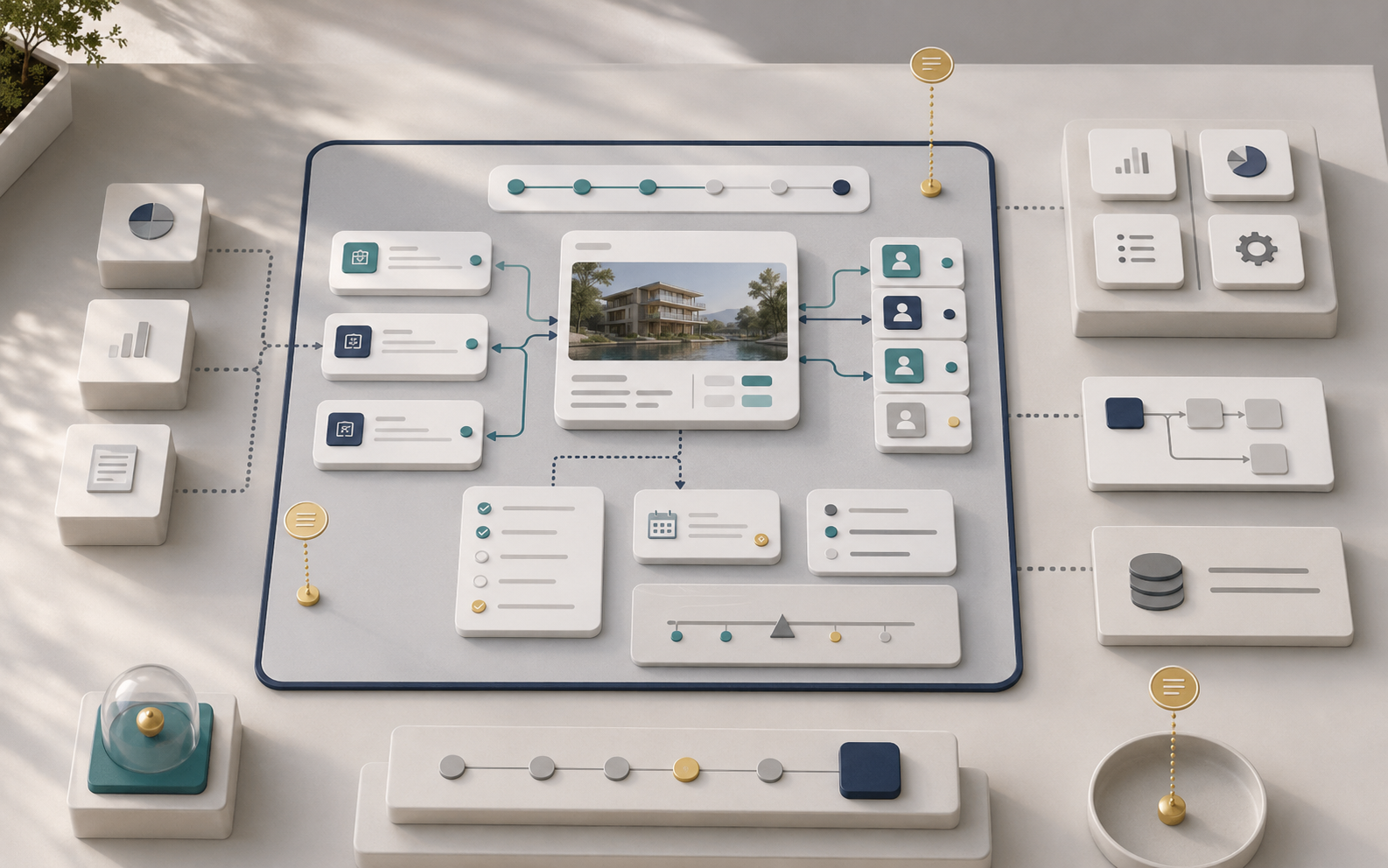
What the pilot covers.
And what it does not.
Before the start, the property, workflows, modules, roles and partners are defined, together with the required participation and the criteria used to evaluate the pilot.
Included in the pilot
Property assessment, host onboarding, selected modules, roles and access, checklists, partner assignments, photo evidence, response times, escalation paths and documented evaluation.
Not included
No generic sales demo, no full implementation of every module, no unlimited free production operation, no regulatory certification and no general legal, tax, data-protection or compliance assessment.
From first assessment to decision
The pilot follows a clear sequence. Each phase builds on the previous one and is prepared together with the host or operator.
1
Map the operating case
We document the property, units, recurring workflows, existing partners, responsibilities and current points of friction.
.avif)
2
Define the working basis
Documents, checklists, roles, service boundaries, response times and observation points are prepared jointly and limited to the pilot.
3
Onboard partners and workflows
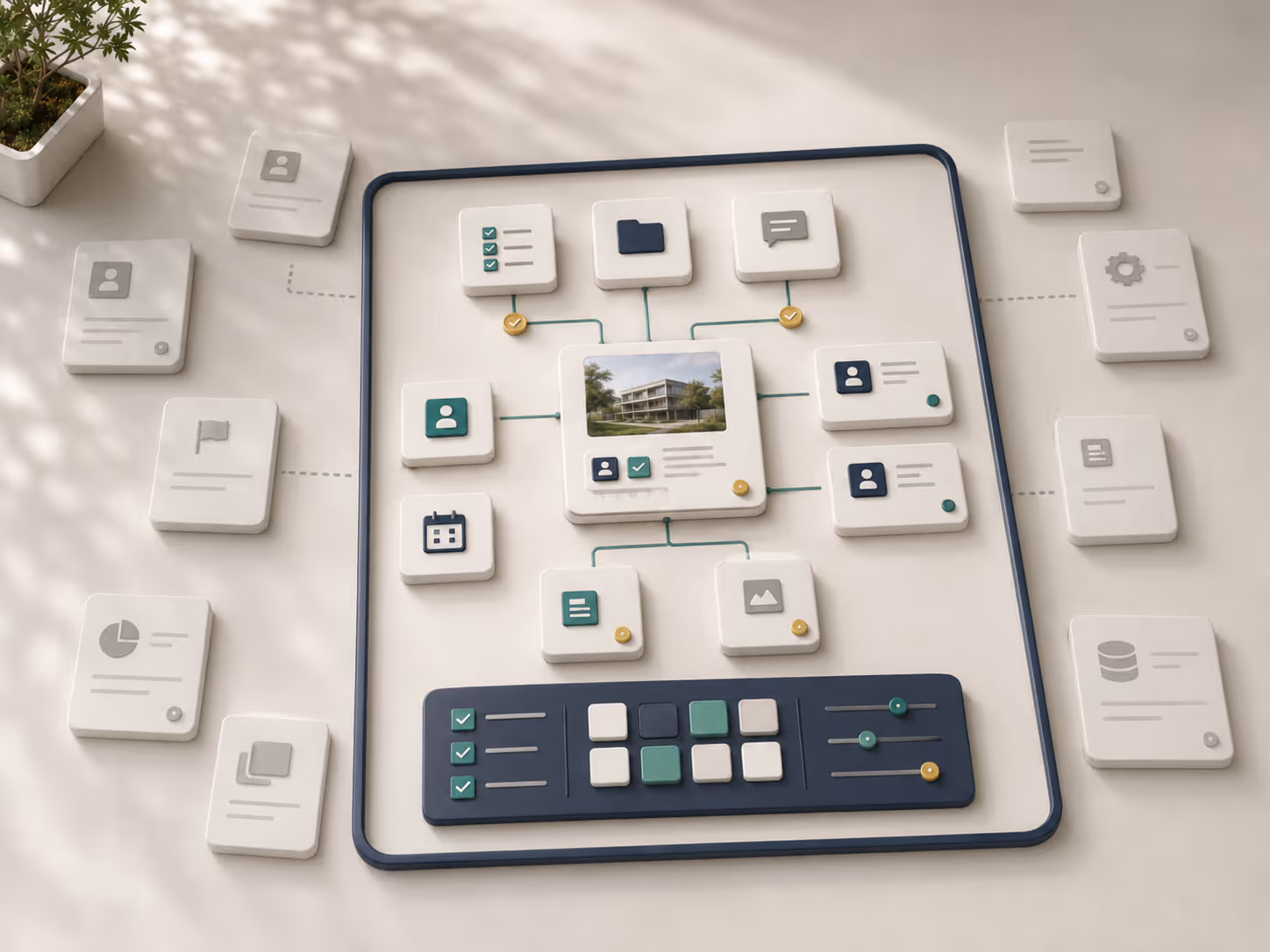
The host’s own partners or suitable service providers proposed by Oprivia are included. Tasks, expectations, photo records and feedback paths are defined before the start.
.avif)
4
Test and review
The selected workflow is tested in daily operations. Experience, deviations, open points and improvement needs form the basis for the next decision.
.avif)
A limited case before wider rollout
Before operational testing begins, the property, workflows, documents, responsibilities and expected outcomes are fixed.
Defined frame
Property, included workflows, modules, roles, partners, checklists, photo records, response times, start criteria and excluded services are defined.
Observed signals
Responsibilities, feedback paths, execution quality, deviations, partner communication, photo documentation and adjustment needs are assessed.
Who contributes what
The pilot only works when responsibilities and required contributions are clarified before operational use begins.
Oprivia
Oprivia leads onboarding, structures the assessment, prepares documents and checklists, configures the pilot frame and supports the review.
Host or operator
The host or operator provides information about the property, existing workflows, partners and internal responsibilities, and participates in approvals and feedback.
Partners and service providers
Cleaning, facility or other service partners receive clear tasks, expectations, feedback paths and requirements for photo records. Existing partners can be included or suitable partners proposed.
Documented outcome
The documented outcome includes the baseline, pilot scope, configured workflows, roles, partner assignments, observations, exceptions, achieved objectives and remaining adjustments. This provides a clear recommendation to continue, modify, pause or stop.
Four possible next steps
The review does not create an obligation to continue or roll out. It shows which next step is appropriate.
Continue
Move into regular operation under a separate agreement with clearly defined services.
Refine
Adapt modules, roles, checklists, partner tasks or observation points and test again.
Pause
Resolve open questions, internal responsibilities or partner matters before restarting.
Close
End the pilot without any obligation to continue or commission further services.
When a pilot makes sense
A pilot is useful when there is a specific operating case and the required participation is available.
Suitable operators
Professional hosts, business apartments, serviced apartments, portfolio operators, property managers and operational partners with recurring workflows around property, cleaning, handover or guest support.
Required conditions
A specific property or clearly defined use case, available process information, named contact persons, participating partners and willingness to review the results jointly.
Find the right starting point
Briefly describe your situation, property and involved partners. We will assess whether a limited pilot is appropriate and which starting point makes sense.