
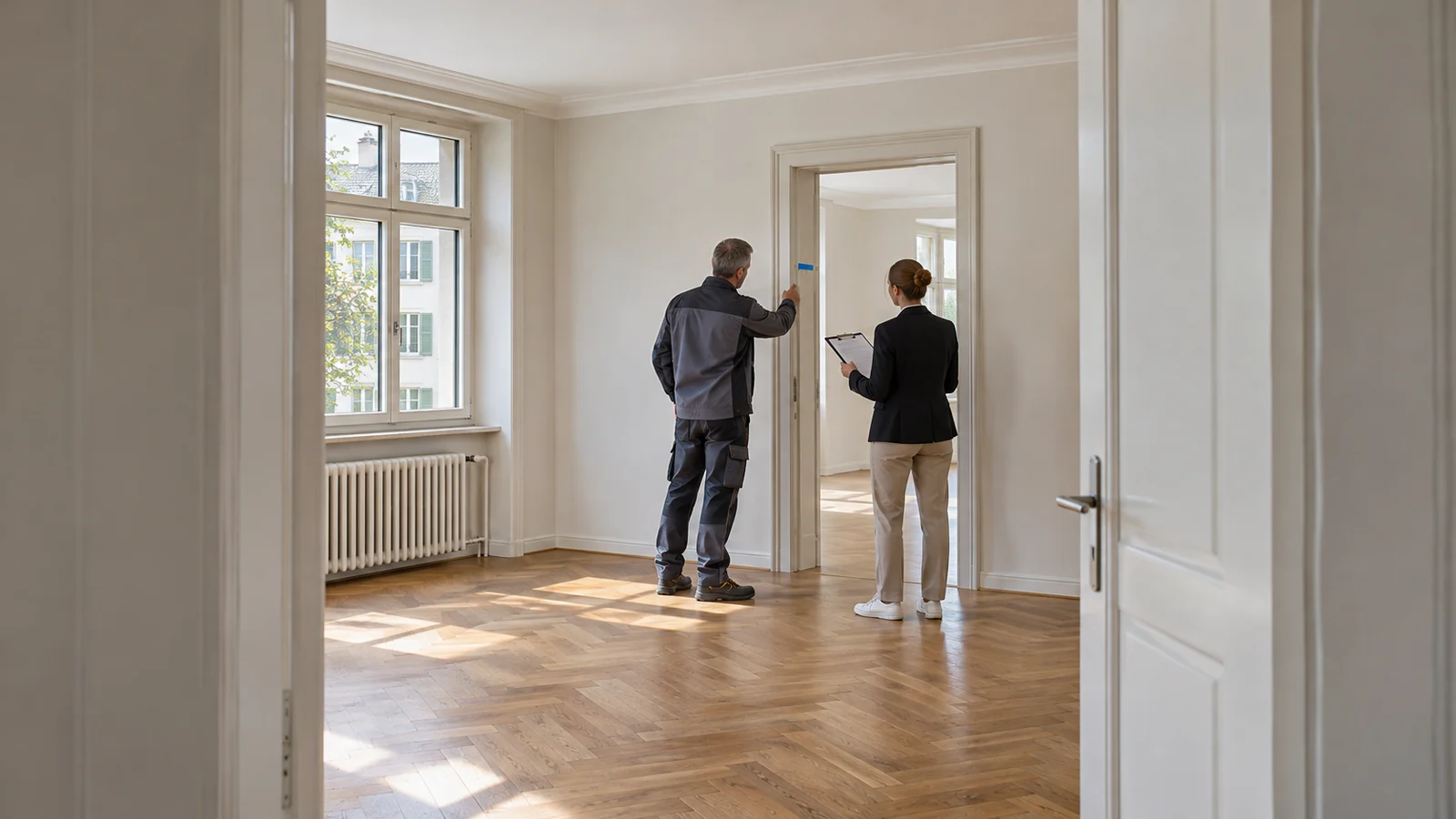
Which key can the afternoon shift hand over?
At 1:10 on Friday, the site supervisor calls to say that work on the third floor is finished. Housekeeping has cleaned two apartments. A tenant is due at three. The property manager asks the building supervisor a practical question: “Which way can I bring her in with her boxes?” The main door is open. There are still protective boards between the elevator and apartment 3.2 because a contractor is coming back later. The route to 3.1 is clear. Two clean apartments already need separate decisions.
This is a worked example. The same reasoning applies to an unfurnished rental and a serviced apartment. The promise to the incoming resident concerns one particular home, the route into it and a time. A cleaning report records the work the crew was hired to do. It takes a walk through the property to find out whether someone can get in with the key they will be given, use the bathroom and set down their belongings. Keep a separate release decision for each apartment, even if both units share a work order and an arrival date.
Establish what the resident is entitled to find
Start with the agreed scope for apartment 3.1. An unfurnished home might include fitted kitchen equipment, an assigned basement storage locker and two sets of keys. For a furnished stay, check the sleeping arrangements and services in the booking. A sofa bed may count as the second bed. In that case, try opening it where it actually stands and locate the bedding promised for the second guest. That check can be marked inapplicable in an unfurnished rental. The number of rooms on a floor plan tells you little about either commitment.
Record the property, the exact unit, its intended use, the handover time and the work order on the first page of the inspection form. Refer to the current inventory or the agreed description of the rental. If a storage locker appears on the plan but nobody can tell you which locker number belongs to this tenant, record the discrepancy and contact the manager. A tick beside “storage” will be of little use to someone standing in front of three unmarked doors with a box in their arms.
Ask who entered after the final clean and who still has work to do. A flooring contractor may be waiting for a replacement trim while housekeeping has finished everything it agreed to do. The questions for the release decision are where the trim belongs, which areas the return visit will affect and who will check those areas afterward. Formal acceptance of building work, any required commissioning and the joint handover with the tenant each have their own purpose. If safe use depends on an outstanding specialist report, obtain it from the responsible party before authorizing occupancy.
Follow the route the resident will take
Begin outside the building. Bring the key, fob or other means of access that the resident will receive. Does it open the specified entrance? Can someone carrying luggage get from that entrance to the elevator and into the apartment by the agreed route? A photograph of a spotless hallway upstairs says little about a blocked landing below. Record which entrance and route you tried. In a serviced apartment the test may also reveal a wrong turn in the arrival instructions. Leave personal access codes out of photographs and inspection reports circulated to other teams.
Inside, let the work that took place guide your inspection. A newly installed cabinet can look immaculate with its drawers shut. Pull out the top drawer to see whether the fitter left shavings behind. A window replacement also affects handles, frames and sills. In the bedroom, look at the shelf above the freshly made bed. Dust from that shelf can soil the linen after the bed itself has passed inspection. The purpose of opening a cupboard or looking along a shelf is to check the condition the resident will encounter in normal use.
In the kitchen and bathroom, establish what can be safely put into normal use. Once the installation has been cleared, an accessible kitchen tap and drain can be observed in operation. A dry sink cabinet before the test tells you little about its condition afterward. Record the location precisely. “Water on the floor” gives maintenance a search job. “After the right-hand basin was used, water appeared at the back left of the sink cabinet” gives the next person a place to start without assigning a cause. Stop if conditions appear unsafe and refer the matter to the qualified trade.
What the four inspection results mean
Use “Pass” when the actual condition meets the agreed criterion. “Defect” records an observed deviation. “Open” means the required inspection or its result is outstanding, perhaps because the basement is locked. “N/A” applies when the item falls outside the scope for that particular home. A bathtub is inapplicable in a shower-only apartment. A bathroom nobody has been able to enter remains open. The distinction matters to the next shift: only one of those entries requires someone to return with a key.
The inspection form follows the resident from the entrance through the living areas, kitchen and bathroom. It also provides space for additional rooms, evidence, corrective work and the release decision. Reference each finding where it was first recorded and use the same identifier in the action record. If there are two similar rooms, add a description that someone can recognize on site, such as “bathroom by the entrance” or “bedroom facing the courtyard.” The person on the later shift should be able to pick up the form and walk straight to the spot.
Download the apartment readiness inspection form (PDF)
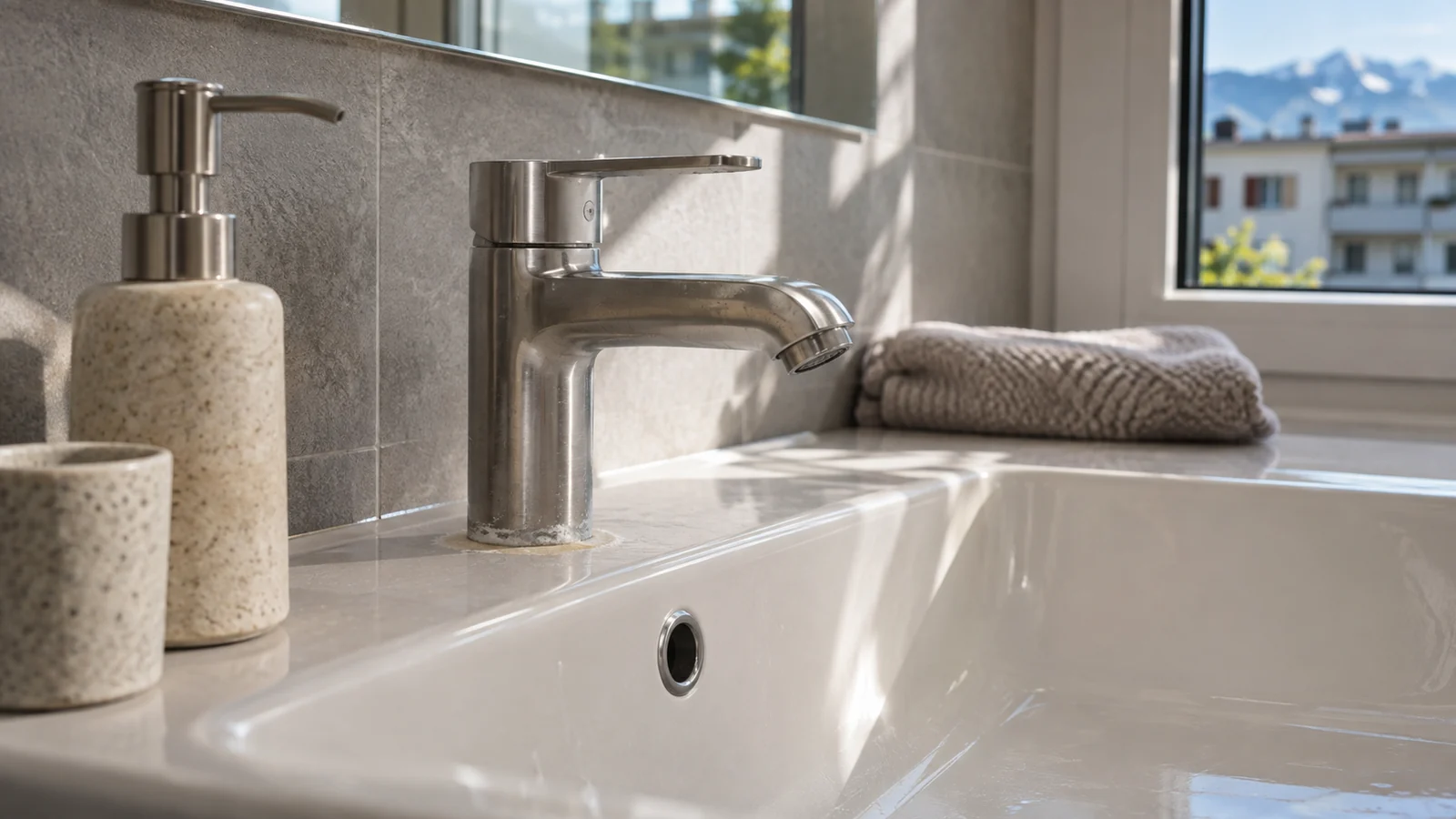
Two marks in a bathroom call for different work
In apartment 3.1 there is a removable mark along the edge of a mirror. Housekeeping uses a method suitable for the surface. The reviewer then looks at the same edge under comparable light and records that it is clean, with the location and time. A short note is enough to close this finding. Ordering a second clean of the whole apartment would create work without improving the decision about that mirror.
In apartment 3.2 the floor outside the shower gets wet again during ordinary use. Housekeeping has already dried the floor once. Wiping it again just before the plumber arrives would remove the very observation the plumber needs. Record which side of the shower is affected, where water appeared and whether it affects access to the bathroom. Leave the cause for the trade to establish. If this is the only shower and its safe use is unresolved, hold the apartment. A photograph taken after the floor has dried is poor evidence that the fault was corrected.
A repair completion message tells the reviewer when to start arranging a new check. Ask the contractor when the shower may be used again following the work. Once cleared, verify that it works in the permitted conditions, that the adjacent floor stays dry and that any debris from the visit has been removed. Record who checked the outcome and when. The manager can then give the incoming shift a much more useful answer than “The plumber has been.”
The person authorized to release the unit makes an independent decision after the corrective work and records it on the form. Timing matters. If the crew goes back to cut trim in the entrance after the walkthrough, the earlier cleanliness check no longer describes that route. Oprivia’s guide to maintenance and incident management follows the records that can accompany a technical fault from the first call to reopening.
Leave an action that another person can close
A useful action record answers five questions. Where was the issue observed? Which part of the promised stay does it affect? Who owns the next step? When does the manager need an answer? What observation would justify closing the finding? For the shower, the last answer might be “After the plumber clears the installation for use, operate the shower normally and inspect the adjacent floor.” Keep a suspected cause or disputed responsibility for the bill out of the description of what you actually saw.
Choose evidence for the person who will need it. A wide shot and a close-up can help a contractor locate a small defect on a long wall. For a missing basement key, the entry on the key schedule may be more useful than a photograph of a closed door. Attach the reference to the finding. If a picture includes nameplates, addresses or personal belongings in the background, select a suitable crop before sharing it. Two published examples of how teams organize such records are Breezeway’s templates by room and item and Pocket Inspections’ photo and location references for findings.
Make a release decision the next shift can act on
Use “Released” when the essential checks for this particular arrival are complete and the conditions have been met. A small paint blemish inside an otherwise usable cabinet might justify “Released with conditions.” Record the finding, the person responsible, the date and any arrangements for later access. Tell the incoming tenant ahead of time if someone will need to enter and agree on access. An operational release records the decision made by the property manager. It does not substitute for the tenant’s participation at handover or settle how the tenant views a defect.
An apartment marked “On hold” needs its own next appointment. For 3.2, the building supervisor may be waiting for the plumber, the property manager owes the incoming resident an update by an agreed time, and the keys stay at the handover desk until a fresh decision is recorded. Offer an alternative apartment or arrival time once it has actually been checked and agreed. If a contractor returns after an apartment was released, reopen the checks for the affected areas and the route used to reach them. Record the latest decision so the desk has one clear instruction.
In the example, the manager makes her decision at 2:30. The mirror in 3.1 has been rechecked, the other agreed items have passed and the route remains clear. She releases that key for three o’clock and keeps the key to 3.2 at the desk. The next shift now needs a short handover. Which key can be issued? What outstanding item goes with that apartment? Which unit is still on hold, who will call back and at what time? The record carries the detail. For routine turnovers after the first arrival, Oprivia’s article on checking cleaning quality between stays explains how to carry the same distinction between work, inspection and release into a much shorter changeover.
Sources and Notes
Editorial and professional context
The two units and the times in the article are illustrative. The release rules and the blank inspection record are practical tools for teams working in their own properties. Provider guidance was checked on November 21, 2026.
External professional sources
- Breezeway, customizing property checklists. How to organize inspection requirements by area, room and individual item.
- Pocket Inspections, documenting and locating findings. Product guidance on attaching photographs, location marks and comments to individual issues.
Oprivia sources
- Cleaning quality in vacation rentals. Defining and reviewing the expected condition between stays.
- Maintenance and incident management. A closer look at access, repair work and verification before reopening.
Scope and limitations
The form records the property manager’s operational decision about the intended arrival. Contractual acceptance, specialist testing and project-specific permissions remain with the responsible parties. The photographs illustrate inspection steps.